ummtaalib
-
Posts
8,472 -
Joined
-
Days Won
773
Content Type
Profiles
Forums
Events
Everything posted by ummtaalib
-
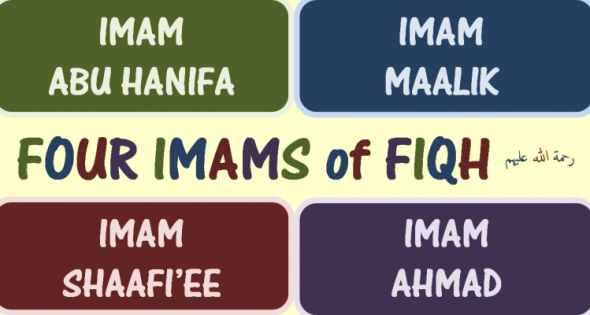
What is a Madhhab? Why is it necessary to follow one? The word madhhab is derived from an Arabic word meaning “to go” or “to take as a way”, and refers to a mujtahid‘s choice in regard to a number of interpretive possibilities in deriving the rule of Allah from the primary texts of the Qur’an and hadith on a particular question. In a larger sense, a madhhab represents the entire school of thought of a particular mujtahid Imam, such as Abu Hanifa, Malik, Shafi’i, or Ahmad–together with many first-rank scholars that came after each of these in their respective schools, who checked their evidences and refined and upgraded their work. The mujtahid Imams were thus explainers, who operationalized the Qur’an and sunna in the specific shari’a rulings in our lives that are collectively known as fiqh or “jurisprudence”. In relation to our din or “religion”, this fiqh is only part of it, for the religious knowledge each of us possesses is of three types. The first type is the general knowledge of tenets of Islamic belief in the oneness of Allah, in His angels, Books, messengers, the prophethood of Muhammad (Allah bless him and give him peace), and so on. All of us may derive this knowledge directly from the Qur’an and hadith, as is also the case with a second type of knowledge, that of general Islamic ethical principles to do good, avoid evil, cooperate with others in good works, and so forth. Every Muslim can take these general principles, which form the largest and most important part of his religion, from the Qur’an and hadith. The third type of knowledge is that of the specific understanding of particular divine commands and prohibitions that make up the shari’a. Here, because of both the nature and the sheer number of the Qur’an and hadith texts involved, people differ in the scholarly capacity to understand and deduce rulings from them. But all of us have been commanded to live them in our lives, in obedience to Allah, and so Muslims are of two types, those who can do this by themselves, and they are the mujtahid Imams; and those who must do so by means of another, that is, by following a mujtahid Imam, in accordance with Allah’s word in Surat al-Nahl, “ Ask those who recall, if you know not ” (Qur’an 16:43), and in Surat al-Nisa, “ If they had referred it to the Messenger and to those of authority among them, then those of them whose task it is to find it out would have known the matter ” (Qur’an 4:83), in which the phrase those of them whose task it is to find it out, expresses the words “alladhina yastanbitunahu minhum“, referring to those possessing the capacity to draw inferences directly from the evidence, which is called in Arabic istinbat. These and other verses and hadiths oblige the believer who is not at the level of istinbat or directly deriving rulings from the Qur’an and hadith to ask and follow someone in such rulings who is at this level. It is not difficult to see why Allah has obliged us to ask experts, for if each of us were personally responsible for evaluating all the primary texts relating to each question, a lifetime of study would hardly be enough for it, and one would either have to give up earning a living or give up ones din, which is why Allah says in surat al-Tawba, in the context of jihad: “ Not all of the believers should go to fight. Of every section of them, why does not one part alone go forth, that the rest may gain knowledge of the religion and admonish their people when they return, that perhaps they may take warning ” (Qur’an 9:122). The slogans we hear today about “following the Qur’an and sunna instead of following the madhhabs” are wide of the mark, for everyone agrees that we must follow the Qur’an and the sunna of the Prophet (Allah bless him and give him peace). The point is that the Prophet (Allah bless him and give him peace) is no longer alive to personally teach us, and everything we have from him, whether the hadith or the Qur’an, has been conveyed to us through Islamic scholars. So it is not a question of whether or not to take our din from scholars, but rather, from which scholars. And this is the reason we have madhhabs in Islam: because the excellence and superiority of the scholarship of the mujtahid Imams–together with the traditional scholars who followed in each of their schools and evaluated and upgraded their work after them–have met the test of scholarly investigation and won the confidence of thinking and practicing Muslims for all the centuries of Islamic greatness. The reason why madhhabs exist, the benefit of them, past, present, and future, is that they furnish thousands of sound, knowledge-based answers to Muslims questions on how to obey Allah. Muslims have realized that to follow a madhhab means to follow a super scholar who not only had a comprehensive knowledge of the Qur’an and hadith texts relating to each issue he gave judgements on, but also lived in an age a millennium closer to the Prophet (Allah bless him and give him peace) and his Companions, when taqwa or “godfearingness” was the norm–both of which conditions are in striking contrast to the scholarship available today. While the call for a return to the Qur’an and sunna is an attractive slogan, in reality it is a great leap backward, a call to abandon centuries of detailed, case-by-case Islamic scholarship in finding and spelling out the commands of the Qur’an and sunna, a highly sophisticated, interdisciplinary effort by mujtahids, hadith specialists, Qur’anic exegetes, lexicographers, and other masters of the Islamic legal sciences. To abandon the fruits of this research, the Islamic shari’a, for the following of contemporary sheikhs who, despite the claims, are not at the level of their predecessors, is a replacement of something tried and proven for something at best tentative. The rhetoric of following the shari’a without following a particular madhhab is like a person going down to a car dealer to buy a car, but insisting it not be any known make–neither a Volkswagen nor Rolls-Royce nor Chevrolet–but rather “a car, pure and simple”. Such a person does not really know what he wants; the cars on the lot do not come like that, but only in kinds. The salesman may be forgiven a slight smile, and can only point out that sophisticated products come from sophisticated means of production, from factories with a division of labor among those who test, produce, and assemble the many parts of the finished product. It is the nature of such collective human efforts to produce something far better than any of us alone could produce from scratch, even if given a forge and tools, and fifty years, or even a thousand. And so it is with the shari’a, which is more complex than any car because it deals with the universe of human actions and a wide interpretative range of sacred texts. This is why discarding the monumental scholarship of the madhhabs in operationalizing the Qur’an and sunna in order to adopt the understanding of a contemporary sheikh is not just a mistaken opinion. It is scrapping a Mercedes for a go-cart. Written by: Shaykh Nuh Keller Amman, Jordan Source

-
Zakaat to ones in-laws Q. Is it permissible to give Zakaat to ones father-in-law, mother-in-law, son-in-laws, daughter-in-laws? Can one give Zakaat to ones brothers, sisters, uncles and aunts? A. It is permissible to give Zakaat to ones In-laws i.e. father-in-law, mother-in-law, son-in-law’s, daughter-in-law’s and so on. It is also permissible to give Zakaat to ones brothers, sisters, uncles and aunts. In fact, ones close family relatives should be given preference over others in discharging Zakaat. This is on condition that the above people are eligible recipients of Zakaat. And Allah Ta’ala Knows Best Mufti Ismaeel Bassa Confirmation: Mufti Ebrahim Desai (Islamic rulings on this Q&A newsletter are answered in accordance to the Hanafi Fiqh) Fatwa Department Jamiatul Ulama (KZN)
-
Hollywood and Bollywood-styled wedding parties A disturbing trend surfacing in the Muslim community is Hollywood and Bollywood-styled wedding parties of song and dance. The party attendees as well as the couple to be, dance and party with each other, at times, with hired musicians and dancers. Such parties are yet another manifestation of the love some Muslims have for the customs of the Kuffaar and their dislike and aversion for the Sunnah of Rasulullah Sallallahu Alayhi wa Sallam. Rasulullah Sallallahu Alayhi wa Sallam was most severe in his condemnation of parties of music and dance: “Most certainly, people from my Ummah will consume liquor which they will call by some other name. Over their heads (on stages) will be musical instruments and singing girls. Allah will cause the earth to swallow them, and from among them He will transform into apes and swines.” (Ibn Maajah) In Muslim weddings today, Muslims are serving wine to their non-Muslim guests and serving their Muslim guests bottles of grape juice that in all respects appear to be bottles of wine. How long will it be before that grape juice bottled like wine is replaced with the real thing? Parties of song and dance are venues which draw the anger of Allah and His punishment. It is Haraam to host such parties and it is Haraam to attend them. We often ask the reason for Muslim suffering in the world. We need merely consider the lifestyle of Muslims today to find the answer. Masjid Poster downloadable here. Jamiatul Ulama (KZN) Council of Muslim Theologians
-
Signboards Hazrat Maulana Yunus Patel Saheb (rahmatullah alayh) Our Muslim names, Islamic dress and our prayers are like the signboard found outside a shop, which informs us that inside this shop, sweets, chocolates, biscuits and cakes are stocked and sold. The person reading the signboard thus expects to find what has been advertised outside, inside the shop. What would the reaction of the person be, if he or she finds dung, manure and excrement inside, instead of sweets and chocolates? In a similar vein, our beautiful Muslim names and Islamic garb informs others that inside our hearts there is a certain ‘merchandise’ in the form of firm Imaan in Allah Ta’ala and love for His Beloved Rasool (Sallallahu Alayhi wa Sallam). A person expects to find, the attributes of trustworthiness, honesty, sincerity, forgiveness, charity, Taqwa (piety), Zuhd (asceticism), Sabr (patience) and Shukr (gratitude). These are the qualities and traits a person expects to find in his social dealings with us. The beard, kurta, turban, tasbeeh, or the cloak, purdah, etc. are all additional signs which lay more and more emphasis on the person’s virtue and goodness. What would a person’s reaction be, when instead of these virtues, he or she finds arrogance, malice, dishonesty and greed? Jamiatul Ulama (KZN) Council of Muslim Theologians
-
- 1
-

-

Laws of ‘Iddah (the post marital waiting period)
ummtaalib replied to ummtaalib's topic in Hanafi Fiqh (Women)
Maintenance for a Widow Q. After a woman is divorced, the ex-husband is responsible for the ex-wife’s maintenance during the Iddah period. Is it the same case when a women’s husband passes away. Will the deceased’s husband wife be entitled to receive maintenance from the estate of her deceased husband during the Iddah period? (Question published as received) A. During the Iddah period of divorce, it is the ex-husbands responsibility to maintain the ex-wife until her Iddah period terminates. However, in the case of the Iddah period of death, the wife is not entitled to maintenance from her deceased husband or his estate. She is entitled to her share of inheritance from her deceased husband’s estate. (Al Lubaab Fi Sharhil Kitaab 1/290) As there is usually a delay in winding up the estate, the executor of the estate should ensure that funds required for the maintenance of the widow be made available to her from her share of the estate, if so required. Note: The Iddah period of divorce is three menstrual for a menstruating woman or three months for a non-menstruating woman. The Iddah period of death is four months and ten days. And Allah Ta’ala Knows Best Mufti Ismaeel Bassa Confirmation: Mufti Ebrahim Desai (Islamic rulings on this Q&A newsletter are answered in accordance to the Hanafi Fiqh) Fatwa Department Jamiatul Ulama (KZN) -
Pearls of Wisdom: No.38 “Food for the Soul” Subject: TRIALS AND TRIBULATIONS Allah, The Most Exalted, says: " It is He who created death and life to test you as to which of you are best in deed, and He is the Almighty, the Forgiving.” (Quran : Surat Al-Mulk 67:2) The Noble Messenger of Allah, Muhammad (peace be upon him) is reported to have said: “Wondrous is the affair of the believer for there is good for him in every matter and this is not the case with anyone except the believer. If he is happy, then he thanks Allah and thus there is good for him, and if he is harmed, then he shows patience and thus there is good for him.” (Hadith-Sahih Muslim 2999) Note: Trials can be a sign that Allah intends good for us, because through trials our sins are expiated and we have the opportunity to perform good deeds as well as reflect on our past. Remember if Allah Ta’ala has taken us TO it…He will most definitely take us THROUGH it! Remember that for every lock Allah Ta’ala has created a key… For a motivational article on TRIALS & TRIBULATIONS please visit : http://eislaminfo.blogspot.co.za/2016/04/the-smoke-signal.html
-
"No dogs allowed except on leash" Hazrat Moulana Yunus Patel Saheb (rahmatullah alayh) Whilst taking a walk through a park one morning, accompanied by some friends, we passed by a sign which is generally found in many parks. It read : “NO DOGS ALLOWED EXCEPT ON LEASH”. Considering a deeper meaning to the sign, I mentioned to my companions: Our nafs (ego) is akin to a dog. The nature of an undisciplined, unleashed dog is that it barks, relieves itself anywhere, devastates and lays waste the delicate flower beds as it tramples them, attacks or spoils people’s picnics, and runs after that which it should not. Without its leash and without training, it can scare, harm and bite others, as well as cause damage. Therefore the Parks Board insists that dogs be on leash. A dog, well trained, will obediently remain on leash, under the control of its master and will not cause inconvenience or damage. It will walk along its master and do as he commands. The temperament of the nafs (carnal self/ego) is like that of the dog. It also needs to be disciplined and trained, and it also requires a leash. This leash is the leash of Shariah, the love and fear of Allah Ta’ala, and fear of accountability on the Day of Judgment, tied tightly and securely around its neck. Without this leash, the person will break the commands of Allah Ta’ala and violate the rights of creation. The person will steal, gamble, fornicate, suppress, oppress, abuse his wife, children or parents, and perpetrate various other crimes. Malice, greed, jealousy, pride and other filthy, vile qualities will also be found in the person’s heart. People will distance themselves from such a person for fear of being harmed or troubled. The person who has disciplined his nafs and controls it with the leash of Shariah, will find that it becomes submissive and compliant to the instructions of its Master. The person then finds it easy to fulfil the rights of Allah Ta’ala as well as creation, since the nafs is compliant to its Master’s commands. The person will want to do good deeds, assist people, invite others to Deen. …He will not cause harm to people; rather he will benefit them. People will then love such a person. When there is a need to go to the shops, factories, airports, hospitals, etc., the person will first leash the nafs with the Khauf (fear) and love of Allah Ta’ala and then go about the fulfilment of duties. Nabi (Sallallahu Alayhi wa Sallam) has said : “The intelligent one is he who suppresses his desires and practises for what is after death, and the foolish one is he who makes his nafs follow its desires and (he) places (baseless) hope on Allah.” (Tirmizi) Jamiatul Ulama (KZN) Council of Muslim Theologians
-
- 1
-
-
The Gift of Mi’raaj Mi'raaj was one of the most remarkable events in the life of Rasulullah Sallallahu Alayhi Wa Sallam. Miraculously he was taken from Makkah Mukarramah to Baitul-Maqdis and from there he Sallallahu Alayhi Wa Sallam ascended into the Heavens and further into the Divine Presence of Allah Ta’ala. This was a unique honour for Rasulullah Sallallahu Alayhi Wa Sallam. We must be aware that there are various dates given by the historians for when Miraaj took place and none of these dates including the 27th of Rajab is conclusive. However, one thing is for certain. On this night Rasulullah Sallallahu Alayhi Wa Sallam was bestowed with a gift like no other. A gift so precious that Allah Ta’ala did not send it to the earth, rather He gave it directly to Rasulullah Sallallahu Alayhi Wa Sallam in the heavens. That gift is the gift of Salaah. In a Hadith Qudsi, Allah Ta’ala states, “Verily, I have made five Salaah compulsory on your Ummah and I have taken a pledge that whoever will steadfastly perform his Salaah at its appointed time, I will enter him into Paradise.”(Ibn Majah) May Allah Ta’ala grant us all the ability to truly appreciate the gift of Mi’raaj, Ameen. For further reading on Mi’raaj and its amazing occurrences you may download The Miracle of Mi’raaj by Mufti Muhammad Aashiq Ilaahi Bulandshari here. Jamiatul Ulama (KZN) Council of Muslim Theologians
-
The month of Rajab Q: I want to ask that did the event of mi'raaj really take place on 27th of rajab? What Aa'maal should be done on that night and what is the importance of fasting on that day? A: The month of Rajab is among the four sacred months of the Islamic year. In these four sacred months we are commanded to carry out extra ibaadaat and safeguard ourselves from committing sins. The rewards for carrying out righteous actions are increased and the sins for carrying out evil deeds are more. Hence one may observe nafil fasts, perform nafil Salaah and carry out extra ibaadaat in the month of Rajab and the other sacred months. However there is no special virtue mentioned in the Ahaadith regarding any particular ibaadat to be carried out during any specific day or night in the month of Rajab. And Allah Ta'ala (الله تعالى) knows best. عن علي بن أبي طلحة عن ابن عباس في قوله إن عدة الشهور عند الله اثنا عشر شهرا في كتاب الله إلى قوله منها أربعة حرم ذلك الدين القيم فلا تظلموا فيهن أنفسكم قال لا تظلموا أنفسكم في كلهن ثم اختص من ذلك أربعة أشهر فجعلهن حرما و عظم حرماتهن و جعل الذنب فيهن أعظم و العمل الصالح و الأجر أعظم (شعب الإيمان #3806) Answered by: Mufti Zakaria Makada Checked & Approved: Mufti Ebrahim Salejee (Isipingo Beach)
-
-
(Click on picture to enlarge)
-
Quotable Quotes - Shaykh Muhammad Saleem Dhorat
ummtaalib replied to ummtaalib's topic in Inspiring Quotes & Poems
(Click on picture to enlarge)
-
-
-
Quotable Quotes - Shaykh Muhammad Saleem Dhorat
ummtaalib replied to ummtaalib's topic in Inspiring Quotes & Poems
(Click on picture to enlarge)
-
Is it permissible to give zakaat to Sayyids? Q: Is it true that zakaat shouldn't be given to Sayyids. I wanted to give my yearly zakaat amount to one of my family relatives as they are very poor but my mom stopped me and told me that zakaat cannot be given to Sayyids. Is this true? A: It is not permissible to give zakaat to Sayyids. However you may assist them with besides zakaat. And Allah Ta'ala (الله تعالى) knows best. (لا) يصرف (إلى بناء) نحو (مسجد و)…. (و) لا إلى (من بينهما ولاد) ولو مملوكا لفقير (أو) بينهما (زوجية) ولو مبانة وقالا تدفع هي لزوجها… (و) لا إلى (غني) يملك قدر نصاب فارغ عن حاجته الأصلية من أي مال كان كمن له نصاب سائمة لا تساوي مائتي درهم…(و) لا إلى (طفله) بخلاف ولده الكبير وأبيه وامرأته الفقراء وطفل الغنية فيجوز لانتفاء المانع (و) لا إلى (بني هاشم) إلا من أبطل النص قرابته وهم بنو لهب فتحل لمن أسلم منهم كما تحل لبني المطلب ثم ظاهر المذهب إطلاق المنع وقول العيني والهاشمي يجوز له دفع زكاته لمثله صوابه لا يجوز نهر… (ولا) تدفع (إلى ذمي) لحديث معاذ (در المختار 2/ 344-350) Answered by: Mufti Zakaria Makada Checked & Approved: Mufti Ebrahim Salejee (Isipingo Beach)
-
Foster care of children in Islam Question Is foster care of children allowed in Islam? What is the proper method of adoption? What about organizations that require a couple to be married 3 years, is this required in Islamic adoption? What about purdah, is the child mehram or nonmehram to adoptive parents? Up to what age must the child be cared for? what about programs that wont give child until three years later? Answer If by adoption is meant that you take a poor child and look after his boarding, lodging and clothing, Islam has always stressed the importance of helping the poor and needy people. One can always give charity and fatherly love to the child. It is reported in a Hadith that the one who assumes responsibility for the well-being of an orphan will be granted the nearness of Nabi (Sallallahu Alayhi Wasallam) in Jannat (Mishkaat). This is an extremely neglected Sunnat of our beloved Nabi (Sallallaahu Alayhi Wasallam) and we should definitely aspire in this direction; however, we must uphold the framework of the Shariah. One cannot legally adopt; you cannot give your name to the child. Legal adoption like this is prohibited in Islam. If a person legally adopts a child there can be several complications. Firstly, the child will lose his identity. Secondly, suppose after adopting a child one has children of his own. It is natural that in such a situation you will show bias in favour of your own blood child. Thirdly, if the child born to you is of the opposite sex to the adopted child, they cannot freely stay in the same home because they aren’t blood related to each other. When the adopted child, a girl, grows up, she has to make Purdah (Hijaab) with the adopted father as he is not her real father. If the boy becomes a man and marries, there will be Hijaab between the so called father and daughter-in-law. If you adopt a child you will be depriving him/her of many rights. If a person dies, the property that he leaves behind has to be divided according to what is mentioned in the Qur’an. If the person has children and if he legally adopted a child, he will be depriving his own child of his legitimate inheritance. If a person has no children when he dies, then his wife will get 1/4 the estate. If there are children she gets 1/8. Again the adopted child will reduce the share of the mother should this child be considered legally legitimate. To avoid all these complications, legal adoption is prohibited in Islam. However this should in no way dissuade us from earning tremendous reward by taking care of orphan children. and Allah Ta’ala Knows Best Mufti Ebrahim Desai askimam
-
Q. Does fosterage refer to adoption in Islam? A. If by fosterage you are referring to the breastfeeding/suckling (Radhaa’at) of a child, then there is a difference between fosterage and adoption in Islam. If a child is breastfed/suckled before the age of two years, a bond of fosterage (Radhaa’at) is established. The relationship that is established through lineage will be the same relationship that will be established through fosterage (Radhaa’at). For e.g. ones foster mother, father, brother, sister etc. would be considered to be one’s Mahrams. If a child is taken under one’s care and adopted without breastfeeding/suckling (Radhaa’at) the child, then no bond of fosterage (Radhaa’at) will take place. In this case, the child would not be considered to be ones Mahram. The laws that govern breastfeeding/suckling/fosterage (Radhaa’at) are different from the laws of adoption in Islam. And Allah Ta’ala Knows Best Mufti Ismaeel Bassa Confirmation: Mufti Ebrahim Desai (Islamic rulings on this Q&A newsletter are answered in accordance to the Hanafi Fiqh) Fatwa Department Jamiatul Ulama (KZN) Council of Muslim Theologians
-
The Fiqh of Adopting a Child <QUESTION> What is the Fiqh of adopting a child? <ANSWER> In the name of Allah, Most Compassionate, Most Merciful, Adopting someone else’s child, bringing it up, seeing to its education and training and being kind and good towards him/her is very virtuous and a commendable act. If the child is an orphan and has no support, then the reward is much more. In a Hadith recorded by Imam al-Bukhari in his Sahih, the Messenger of Allah (Allah bless him and give him peace) said: “I and the guardian of the orphan will be in Paradise like this” and the Prophet (Allah bless him and give him peace) joined his index finger with his middle finger. (Sahih al-Bukhari) Meaning that the one who looks after the orphan will be very close to the Prophet (Allah bless him and give him peace) in Paradise. This is an extremely neglected Sunnah of our beloved Prophet (Allah bless him & give him peace), and we should definitely encourage ourselves and others towards this direction. However, it should always be kept in mind that according to Shariah, the lineage of the adopted child does not become established with the adoptive parents. Adoption of a child has no legal effect in Shariah. The child should not be attributed except to the natural parents, and not to those who have adopted him/her. This is a fundamental principle and ruling laid down by the Holy Qur’an. The people in the days of ignorance (Jahiliyya) used to treat an adopted child as the real one in all aspects. The Qur’an condemned this practice with the following verse: “And He (Allah) did not make your adopted sons your sons. That is only your speech by your mouths. And Allah guides you to the right path. Call them by (the names of) their (real) fathers. It is more just in the sight of Allah.” (Surah al-Ahzab, v: 4, 5) The Messenger of Allah (Allah bless him and give him peace) adopted the Companion Zaid ibn Haritha (Allah be pleased with him), thus the other companions (Allah be pleased with them) initially referred to him as “Zaid ibn Muhammad”. When the abovementioned verse of the Qur’an was revealed, they reverted to calling him “Zaid ibn Haritha”. In view of this important principle of Shariah, the following points need to be taken in to consideration: 1) Legal adoption is not permissible. This means that one cannot change the lineage of an adopted child and substitute the names of his real parents with adoptive parents. The child should always be attributed to the real parents so that it becomes common knowledge amongst the people who the real parents are. 2) If the adoptive mother breastfeeds the adopted child, then it becomes their foster child. In this case the child will be similar to the real children with regards to the Nikah and Hijab rules, i.e. the child can not marry the foster parent, neither any of the foster parent’s children. However with regards to inheritance, the child will not inherit from the family. 3) If the adoptive mother does not breastfeed the adopted child, then the relationship of fosterage will not be established and the child will be classed as other children with regards to Nikah and Hijab. An adopted child can marry its adoptive parents and their children. Also if a male child is adopted by a woman, she will have to observe Hijab from him after he reaches the age of puberty and visa versa. The adopted child will also (after puberty) observe Hijab with the adoptive parent’s children. 4) An adopted child will not inherit from his adoptive parents and to regard an adopted child as a real child in the matter of inheritance is incorrect. However, it should be remembered that although the child cannot inherit from the adoptive parents, it is permissible, rather advisable to make a bequest in its favour in ones life time. This “will” for the child can be made up to one third of one’s wealth, provided the child is not already included in the list of inheritors. 5) It is necessary to allow the adopted child to meet its real parents. Preventing him/her from meeting them and creating any obstacles will be considered as oppression. 6) Good behaviour and conduct should be displayed towards the adopted children, especially if they are orphans. If a person cannot look after the adopted child in a proper manner, then he should not adopt, otherwise he will earn punishment rather than reward. 7) The wealth of the adopted child, who has not yet reached puberty, should be kept safe. If there is a need to spend the money on the child, then one can utilize the child’s money upon him. However it should be spent with extreme care and there should be no extravagance. Loans cannot be taken from the child’s money, nor can it be given in charity. From the foregoing, all your queries should be answered; nevertheless here are the answers to your questions: (1) Yes, the boy will be considered a brother to the children whose mother breastfed him, and therefore all the rules Nikah will apply. (2) Yes, the boy will be a Mahram to the woman who breastfed her and thus Nikah with her or her children will be not allowed. (3) No, the boy will not be a Mahram to the adoptive mother and will have to observe Hijab with her after reaching puberty and also the rules of Nikah will apply. And Allah Knows Best [Mufti] Muhammad ibn Adam Darul Iftaa Leicester , UK
-
Duaa before Sleeping – 10 One should recite the following duaa before going to sleep لاَ إلَهَ إلاَّ اللَّهُ وَحْدَهُ لاَ شَرِيكَ لَهُ، لَهُ الْمُلْكُ وَلَهُ الْحَمْدُ وَهُوَ عَلَى كُلِّ شَيْءٍ قَدِيرٌ ، لاَ حَولَ وَلاَ قُوَّةَ إلاَّ بِاللهِ سُبْحَانَ اللهِ وَالحَمدُ لله وَ لاَ إلَهَ إلاَّ اللَّهُ وَ اللَّهُ أَكْبَر There is no deity besides Allah Ta’ala, who is alone, who has no partner. To Him belongs the entire universe, and for Him is all praise and He has power over everything. There is no ability (to avoid sins) and no power (to do good) except with the help of Allah Ta’ala. Glory be to Allah, All praise is to Allah, there is none worthy of worship besides Allah, and Allah is the greatest. عن أبي هريرة رضي الله عنه عن النبي صلى الله عليه و سلم قال : من قال حين يأوي إلى فراشه : لا إله إلا الله وحده لا شريك له له الملك وله الحمد وهو على كل شيء قدير لا حول ولا قوة إلا بالله سبحان الله والحمد لله ولا إله الله والله أكبر غفر الله ذنوبه أو خطاياه ـ شك مسعر ـ وإن كان مثل زبد البحر (صحيح ابن حبان رقم 5528) Hadhrat Abu Hurayrah (Radhiyallahu Anhu) reports that Rasulullah (Sallallahu Alaihi Wasallam) said: “Whoever recites the following duaa when retiring to bed, Allah Ta’ala will forgive his sins, even though it be as much as the foam of the ocean.” لاَ إلَهَ إلاَّ اللَّهُ وَحْدَهُ لاَ شَرِيكَ لَهُ، لَهُ الْمُلْكُ وَلَهُ الْحَمْدُ وَهُوَ عَلَى كُلِّ شَيْءٍ قَدِيرٌ ، لاَ حَولَ وَلاَ قُوَّةَ إلاَّ بِاللهِ سُبْحَانَ اللهِ وَالحَمدُ لله وَ لاَ إلَهَ إلاَّ اللَّهُ وَ اللَّهُ أَكْبَر
-
How to comaplaint to the BBC (Demonstration Video): https://www.youtube.com/watch?v=3YtXWwtFRrY Complaint to BBC Click this link: ssl.bbc.co.uk/complaints/forms/?lang=en&reset=&ui... Program was called "The Deobandis" Aired on 05th of April 2016 at 09:00 Lodge a complaint
-
Having Hope in Allah Ta’ala Alone Hazrat Mufti Ebrahim Salejee (Daamat Barakaatuhu) mentioned Allah Ta’ala loves this type of sincerity where the heart is cleaned and cleared from every other thing but Allah. One has his hope in Allah Ta’ala alone. One has the conviction within his heart that the only door to get my needs fulfilled is His door. When one makes duaa in this state, then Allah Ta’ala readily answers that duaa.
-
Observing Hijaab in the presence of granduncles Q. Assalaamu alaikum wa rahmatullahi wa barakatuh I recently went into niqaab. 1) Am I allowed to show my face to my mother's aunt's husband? (My mother's aunt is my grandmother's sister) Or in other words, my mum's maternal aunt's husband.*2) Am i allowed to show my face to my mother's blood uncle?*My mother's blood uncle is Her mother's brother. (I.e My grandmother's brother) Both of them are old and are 60-70 Jazakallahu khair (Question published as received) A. 1. Your grandmother’s sister’s husband is considered a non-Mahram (stranger) to you. Hence, you will have to observe Hijaab from him. 2. Your grandmother’s brother is considered a Mahram (non-stranger) to you. Hence, it will not be necessary for you to observe Hijaab from him. (Al-Lubaab-Fi Sharhil-Kitaab 3/4) And Allah Ta’ala Knows Best Mufti Ismaeel Bassa Confirmation:Mufti Ebrahim Desai (Islamic rulings on this Q&A newsletter are answered in accordance to the Hanafi Fiqh) Fatwa Department Jamiatul Ulama (KZN) Council of Muslim Theologians
-
Wa'alaykumus salaam warahmatullaahi wabarakaatuhu Jazakallaahu khayran...topic already posted here
-
Using Social Media - A Responsibility
ummtaalib replied to ummtaalib's topic in General Islamic Articles
Social Media Jumu'ah Talk by Mufti Ebrahim Desai Hafidhahullah Mufti Saheb commenced his talk with the incident of Aadam and Hawa (Alayhimas-Salaam) living in Jannah and being expelled after eating the fruit from the prohibited tree. Mufti Saheb proceeded to explain we are living in this world of technology. 50% of the worlds population are internet users. An average person spends 5 years of his life on social media platforms. Mufti Saheb then explained just as in Jannah there are permissible trees and a prohibited tree, that caused Aadam and Hawa to be expelled from Jannah, there are positive aspects as well as negative aspects of information technology. Some of the negative aspects of information technology are: It disconnects you with those who you ought to be connected Immorality Children having cell-phones and challenges to parents. Should parents give children cell-phones and supervise the use or not give them the cell -phone at all? Mufti Saheb concluded by explaining the law of need in Shari'ah. The prohibition of pork is relaxed due to need. To consume more than the need will be a sin. Information technology is a need. To transgress the need will be a sin like consuming pork. If we are averse to pork, why are we not averse to the sins of social media platforms? Listen to the full talk on http://daruliftaa.net/index.php/resources/audio taken from Here